(© Supertrooper - stock.adobe.com)
SANTA BARBARA, Calif. — We often judge situations or behaviors as wrong, such as seeing an adult treat a child poorly or someone cutting into a long line. While these judgments highlight moral issues, the debate has been long-standing: do all moral judgments share a common thread?
Researchers from the University of California-Santa Barbara examined 64 individuals through surveys, interviews, and brain imaging, and found that while there are common brain regions activated during moral judgments, the brain also processes different moral issues through distinct pathways. These findings suggest a more complex nature of moral reasoning than previously thought.
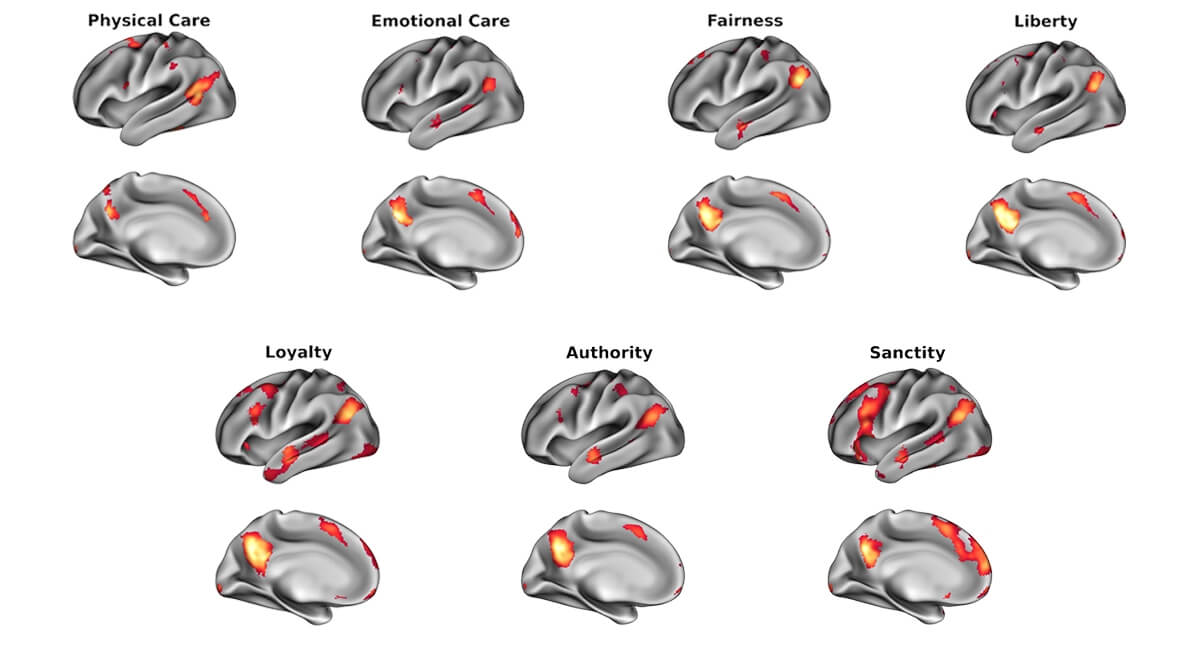
At the crux of their research was a theory called Moral Foundations Theory. MFT posits that human morality revolves around six categories: care/harm, fairness/cheating, liberty/oppression, loyalty/betrayal, authority/subversion, and sanctity/degradation. These categories serve to either protect individual rights or focus on group dynamics.
“In many ways, I think our findings clarify that monism and pluralism are not necessarily mutually exclusive approaches,” says study first author Frederic Hopp, a doctoral student in UC Santa Barbara’s Media Neuroscience Lab, in a university release. “We show that moral judgments of a wide range of different types of morally relevant behaviors are instantiated in shared brain regions.”
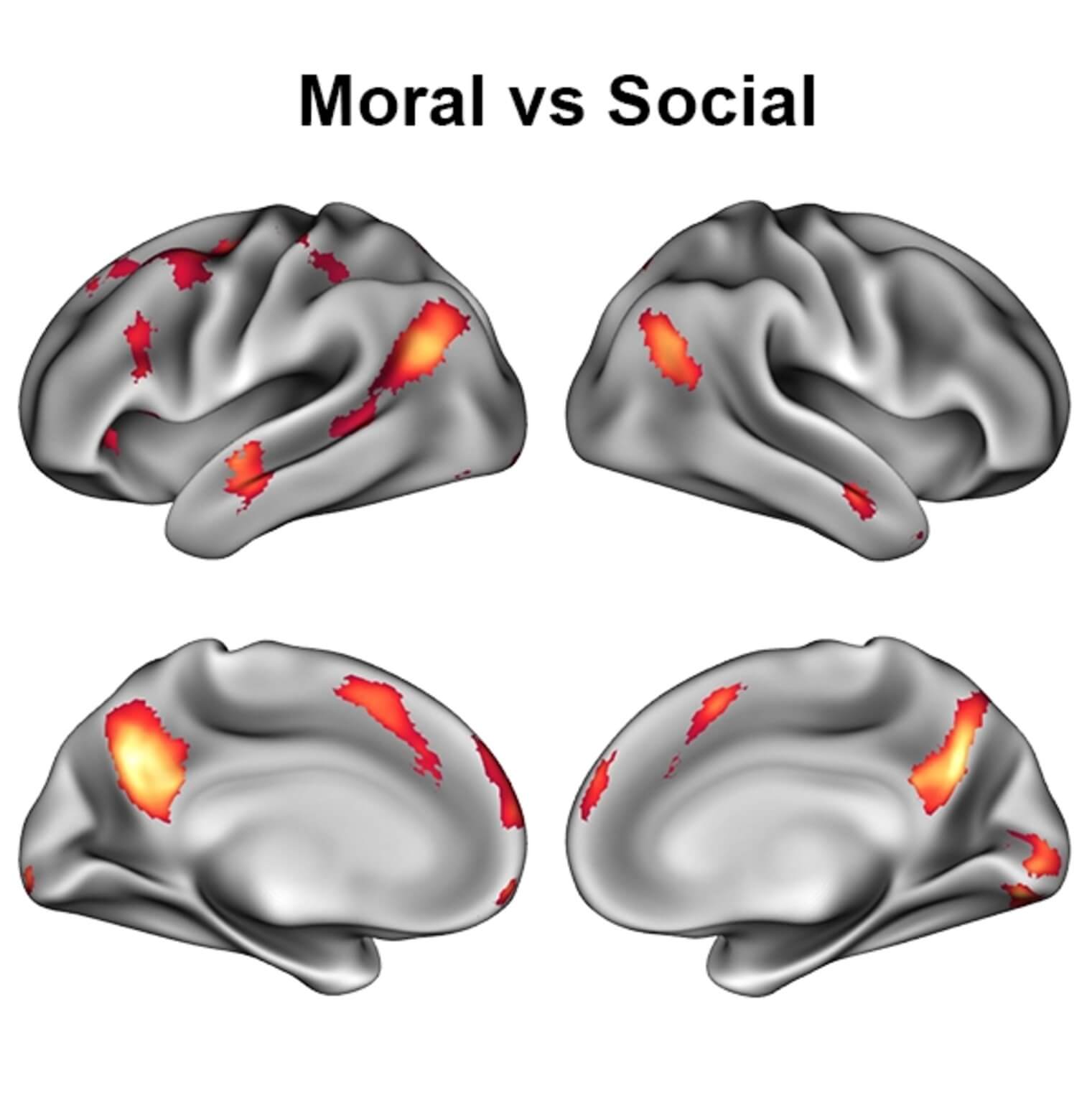
This was supported when a machine-learning algorithm identified which moral category a person was thinking about based on their brain activity. The team also observed that participants took longer to evaluate moral issues compared to non-moral ones.
“Although moral judgments are intuitive at first, deeper judgment requires responses to the six ‘W questions,’” says study senior author René Weber, director and lead researcher of UC Santa Barbara’s Media Neuroscience Lab and a professor in the Departments of Communication and of Psychological and Brain Sciences. “Who does what, when, to whom, with what effect, and why. And this can be complex and takes time.”
The political moral compass
The study found a connection between moral judgments and political leanings. Evidence suggests that liberals lean more towards categories that protect individual rights, like care/harm and fairness/cheating. In contrast, conservatives tend to prioritize group-focused categories, such as loyalty/betrayal and sanctity/degradation.
“Indeed, our results provide evidence at the neurological level that liberals and conservatives have complex differential neural responses when judging moral foundations,” says Weber.
Part of a broader research initiative that started in 2016, this study is paving the way for more in-depth examinations of human morality.
“The observation that we can reliably decode which moral violation an individual is perceiving also opens exciting avenues for future research: Can we also decode if a moral violation is detected when reading a news story, listening to a radio show, or even when watching a political debate or movie?” notes Hopp. “I think these are fascinating questions that will shape the next century of moral neuroscience.”
The understanding of moral judgments has profound implications.
“For millennia, fables and fairy tales, nursery rhymes, novels, and even ‘the daily news’ all weave a tapestry of what counts as good and acceptable or as bad and inacceptable,” says Weber. “Our results contribute to a better understanding of what moral judgments are, how they are processed, and how they can be predicted across different groups.”
The study is published in the journal Nature Human Behaviour.
You might also be interested in:
- Parenting style may determine if children become conservative or liberal
- Politics and generosity: Left-leaning people more likely to be altruistic
- American society becoming more liberal than 50 years ago, but voting for more Republicans
Lea la versión en español en EstudioRevela.com: La actividad cerebral revela diferencias en los juicios morales entre liberales y conservadores.


