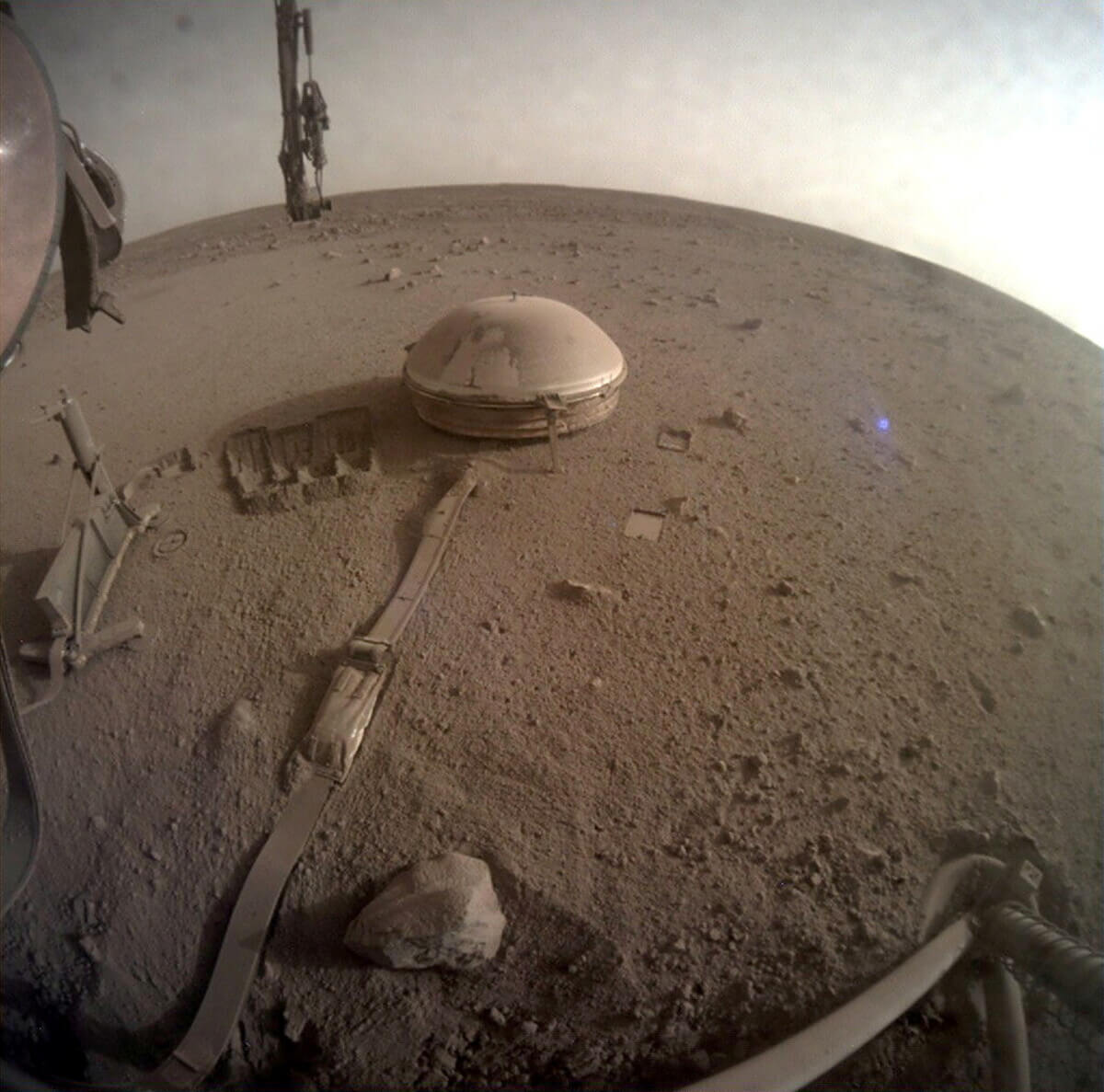
THE FINAL PICTURE? NASA's InSight lander posted this image on Monday, December 19, with the message: "My power’s really low, so this may be the last image I can send." (Credit: NASA)
MARS — A sad message from Mars is making social media users cry back here on planet Earth.
A statement from NASA’s InSight lander posted on Dec. 19 reads, “My power’s really low, so this may be the last image I can send.”
The lander has been on a mission to the Red Planet to study its deep interior. However, the build-up of dust on its solar panels is causing the probe to slowly lose power.
InSight’s message continued, “Don’t worry about me though: my time here has been both productive and serene. If I can keep talking to my mission team, I will – but I’ll be signing off here soon. Thanks for staying with me.”
Twitter user Scott Turek’s comment “Why am I crying over a robot?” was answered by user Mx. Bluets with “Maybe because they’re made from and carry with them the hopes & dreams of humanity, our curiosity and wonder? This makes them avatars of some of our best collective qualities. I’m crying too & my gratitude to the humans who make these missions possible is endless.”
My power’s really low, so this may be the last image I can send. Don’t worry about me though: my time here has been both productive and serene. If I can keep talking to my mission team, I will – but I’ll be signing off here soon. Thanks for staying with me. pic.twitter.com/wkYKww15kQ
— NASA InSight (@NASAInSight) December 19, 2022
Elsewhere, Emma Hayes posted, “Even if it’s only a robot, it’s an honorary member of humanity. I would argue that it’s symbolic of humanity itself,” while another Twitter user added “It’s ok to mourn the loss of an entity.”
InSight, short for Interior Exploration using Seismic Investigations, Geodesy and Heat Transport, is a Mars lander designed to “give the Red Planet its first thorough checkup since it formed 4.5 billion years ago.”
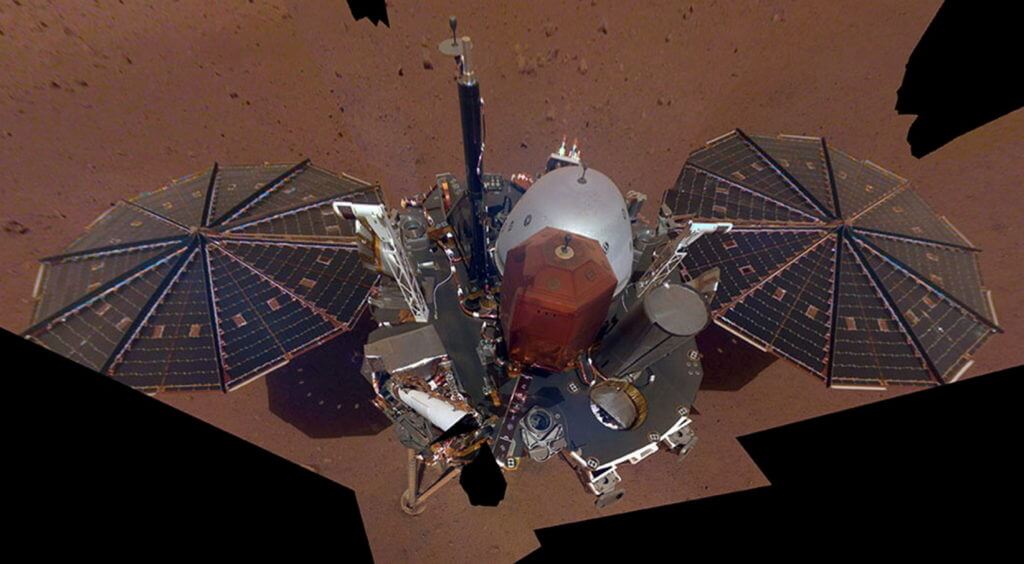
Launched in May of 2018, it is the first outer space robotic explorer to study in-depth the “inner space” of Mars: its crust, mantle, and core. In perhaps one of its final acts of space exploration, InSight has been tracking “marsquakes” in a region called Elysium Planitia. That study may have revealed ongoing volcanic activity on the supposedly dead planet.
READ: Mars is still alive? Here’s why underground lava may explain massive Marsquakes
Report by Dean Murray, South West News Service


