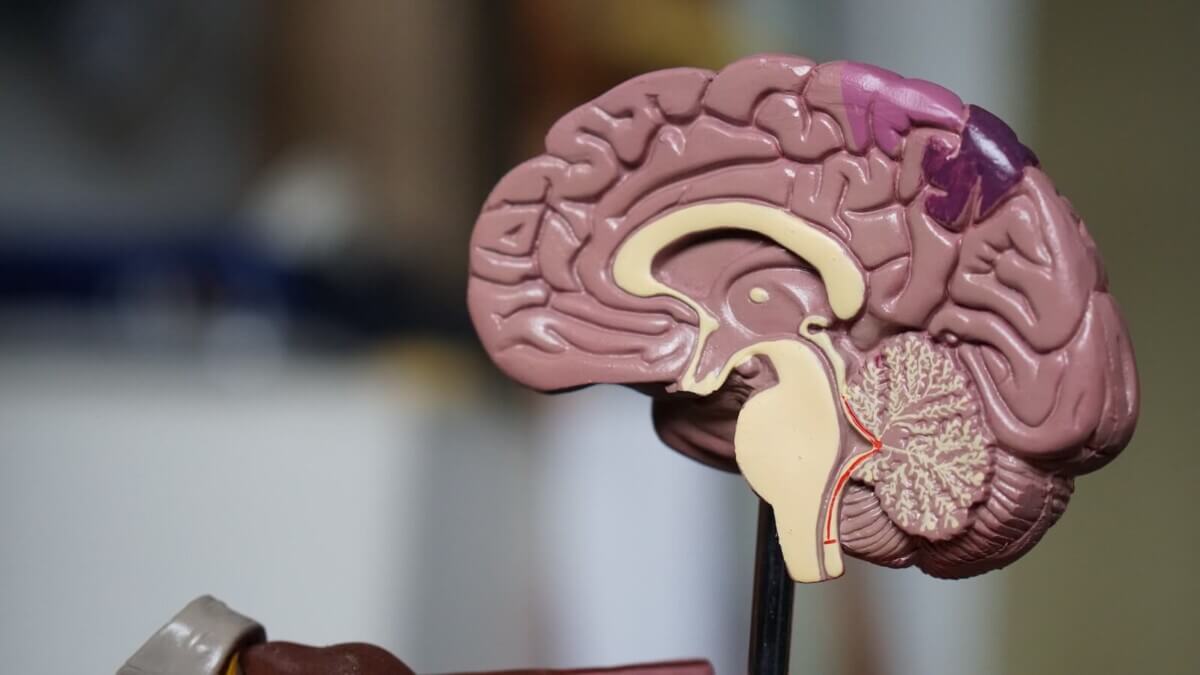
(Credit: Photo by Robina Weermeijer on Unsplash)
Alzheimer’s and Parkinson’s May Have a Hidden Phase: When Brain Cells Are Alive but Already Compromised
In A Nutshell
- Researchers at the Salk Institute found that chronic iron overload in lab-grown neuron-like cells quietly dismantles their defenses without killing them, leaving them far more vulnerable to a second stressor.
- This hidden vulnerable state, which the researchers named “chronoferroptosis,” may help explain why neurons in Alzheimer’s and Parkinson’s disease can appear intact for years before they finally start dying.
- Draining glutathione, the other hallmark of both diseases, produced nearly identical results through a completely separate route, suggesting the two factors converge on the same danger zone.
- An experimental compound that blocks iron-driven lipid damage rescued cell viability, pointing toward a possible therapeutic target if the finding holds up in animal models and human tissue.
For decades, scientists studying Alzheimer’s and Parkinson’s disease have noticed a troubling pattern. Iron accumulates in the brain regions hit hardest by these diseases, and early losses of glutathione, a critical internal antioxidant, have been reported in vulnerable brain regions, especially in Parkinson’s disease. The connection seemed obvious, but a question remained unanswered: how does that slow-burning iron buildup actually push brain cells toward destruction if the cells appear to survive just fine in the meantime?
A new study published in Cell Death Discovery from researchers at the Salk Institute for Biological Studies in La Jolla, California offers an answer from lab-grown neuron-like cells. When exposed to chronic iron overload, these cells didn’t die right away. Instead, they entered what the researchers propose is a hidden danger zone: still alive, but with key protective systems quietly dismantled, leaving them far more vulnerable when the next stressor hits.
Most lab experiments expose cells to a damaging agent for a few hours and call it done. This research suggests that approach misses the slow remodeling that happens over days before any cell actually dies. The researchers call this proposed state “chronoferroptosis.”
A Hidden Pre-Death State and Why Ferroptosis Matters for Brain Disease
Ferroptosis, pronounced fair-OP-toe-sis, is a specific way cells die, driven by iron and involving a chain reaction that destroys the fatty membranes surrounding a cell and its internal compartments. Scientists have suspected for years that this process plays a role in the brain cell loss seen in Alzheimer’s and Parkinson’s disease, where iron piles up and glutathione quietly disappears. What’s been harder to explain is why neurons can look relatively healthy for so long before they finally start dying.
The Salk team, led by Nawab John Dar, David Soriano-Castell, and Pamela Maher, designed an experiment to find out. They used human neuroblastoma cells coaxed into behaving like mature nerve cells, exposing them to iron or a compound that drains glutathione, for either a short burst of six to eight hours or continuously over nine days.

What Nine Days of Iron Stress Actually Does to These Cells
The short exposures produced almost nothing alarming: defenses held, and cells remained resilient. The nine-day exposure told a completely different story.
Over that extended period, the cells activated an iron-storage protein called ferritin, locking away excess iron to limit immediate damage. It looked like a successful defense. But the research revealed a more concerning picture beneath that seemingly protective response.
Chronically stressed cells showed a significant drop in GPX4, an enzyme that acts like a fire extinguisher for the fat-destruction chain reaction at the heart of ferroptosis. Levels of two other protective proteins fell as well. Their fatty membranes showed signs of oxidative damage. Toxic oxygen byproducts accumulated inside the cells’ power-generating compartments. Glutathione was depleted to nearly undetectable levels after nine days, and yet the cells were still alive.
To test how fragile that state had become, the team hit the chronically stressed cells with a second, separate stressor, one that barely affected untreated cells. “Cells under chronic ferroptotic stress exhibited increased sensitivity not only to the ferroptosis inducer RSL-3 but also to hydrogen peroxide,” the authors wrote. Chronically stressed cells lost viability at much higher rates, while those briefly exposed to iron remained largely unaffected.
To confirm this intermediate state wasn’t unique to iron overload, the researchers tested whether draining glutathione alone could produce the same result. Using a compound that blocks glutathione production, nine days of chronic depletion produced almost identical changes: ferritin went up, protective proteins went down, harmful byproducts accumulated, and the same dangerous vulnerability emerged. Both iron buildup and glutathione loss, the two hallmarks already seen in Alzheimer’s and Parkinson’s disease brains, drove cells into this hidden danger zone through completely separate routes.
An experimental compound called ferrostatin-1, which blocks the iron-driven lipid damage at the heart of ferroptosis, substantially reduced that vulnerability and rescued cell viability under lab conditions, confirming that lipid damage is central to the mechanism.

Why This Changes the Picture for Alzheimer’s and Parkinson’s Research
The researchers argue that chronoferroptosis may help explain something that has long puzzled scientists: why neurons in Alzheimer’s and Parkinson’s patients appear relatively intact for years before obvious symptoms emerge, even when iron and glutathione problems are already present. One possibility, still unproven, is that neurons in disease-vulnerable brain regions may pass through a similar state: still alive, but quietly stripped of their defenses, waiting for a hit they can no longer survive.
In the paper’s discussion, the authors wrote: “Chronoferroptosis could explain the prolonged prodromal period between initial iron accumulation and GSH depletion and eventual neuronal loss in neurodegenerative diseases, thereby defining a critical therapeutic window for early intervention before cells transition to irreversible degeneration.” There may be a long stretch of time before neurons die when they are still reachable.
The study used a laboratory cell model rather than living brain tissue or animal subjects, so what happens in an actual human brain remains to be seen. But if neurons spend years quietly losing their defenses before the final blow lands, finding a way to intervene in that window could change the course of some of the most devastating diseases in medicine.
Disclaimer: This article is based on research findings that are yet to be widely tested. Results shown were primarily from animal or lab studies, or early-stage human trials. Delivery methods and dosages may differ significantly from those used in the study. As with all science, most discoveries require more research before they translate to real-world applications.
Paper Notes
Funding & Disclosures
This work was supported by the National Institutes of Health grants R01AG067331 and R01AG069206. The authors declare no competing financial interests or personal relationships that could have influenced the work. The SH-SY5Y cell line was provided by Prof. R. Luke Wiseman of Scripps Research, La Jolla, California. The authors also acknowledge Dr. Antonio Currais for reviewing the manuscript.
Limitations
The authors explicitly note that this study used laboratory-grown cells, specifically a human neuroblastoma cell line differentiated to resemble mature nerve cells, and that in-vivo validation is necessary to determine whether the chronoferroptosis state also occurs in the intact brain. In a living brain, interactions between different cell types and the body’s broader iron regulation systems may influence how ferroptotic vulnerability develops, and these factors are not captured in a cell-culture model.
Publication Details
Authors: Nawab John Dar, David Soriano-Castell, and Pamela Maher, Department of Cellular Neurobiology, The Salk Institute for Biological Studies, La Jolla, CA, USA. Journal: Cell Death Discovery Paper Title: “Sustained dysregulation of iron and glutathione homeostasis induces chronoferroptosis, a persistent ferroptotic adaptation in neuronal cells” DOI: https://doi.org/10.1038/s41420-026-03208-6 Status: Article in Press (accepted June 10, 2026; received January 22, 2026)


