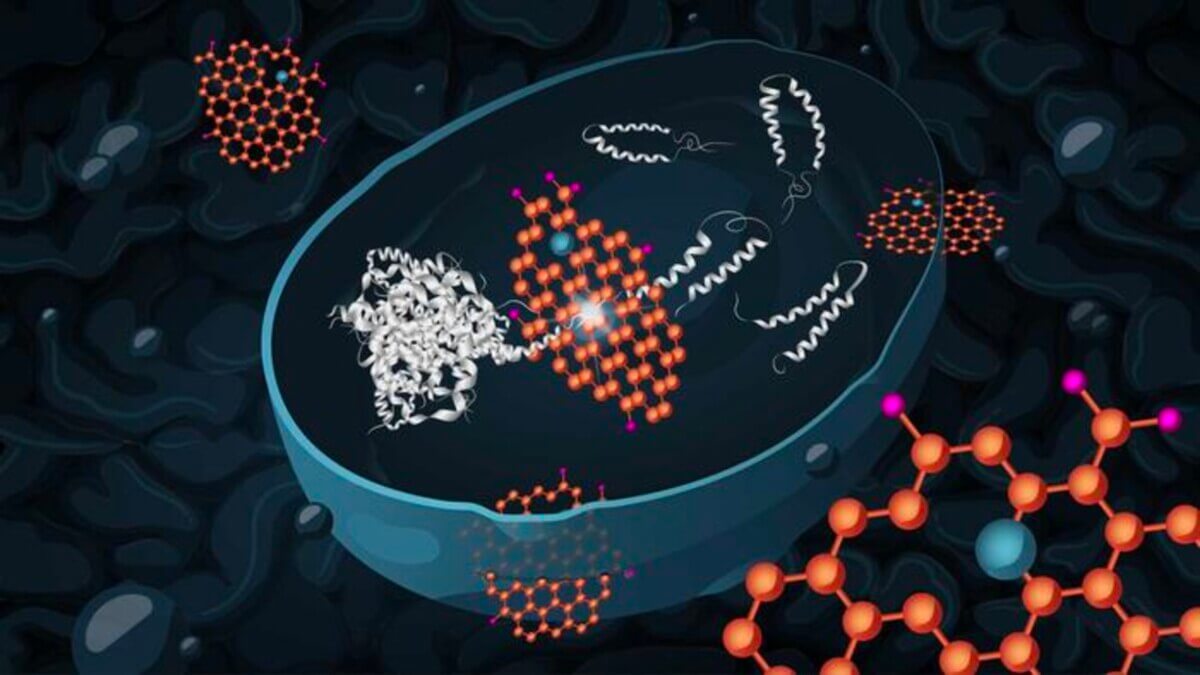
Graphene oxide (orange) can effectively enter yeast cells and reduce the toxicity of harmful protein aggregates (light grey), by promoting disassembly and then degradation of the aggregates. Researchers at Chalmers University of Technology have developed a yeast model, which mimics the neurons in a human brain affected by Alzheimer’s disease, to demonstrate this. Moreover (not shown by the illustration), graphene oxide treatment can alter the metabolism of the cells to increase their capacity to cope with stress. (CREDIT: Chalmers University of Technology / Katharina Merl)
GOTHENBURG, Sweden — Swedish researchers have discovered a promising new lead in the fight against Alzheimer’s disease. They discovered that graphene oxide nanoflakes can help yeast cells plagued by the amyloid peptides – molecules believed to be a key factor in Alzheimer’s – to recover.
Alzheimer’s is a daunting disease. It’s a brain disorder that culminates in dementia and eventually death. Over 40 million people worldwide are grappling with this disease or related forms of dementia. The global financial toll it takes is staggering, consuming about one percent of the world’s gross domestic product.
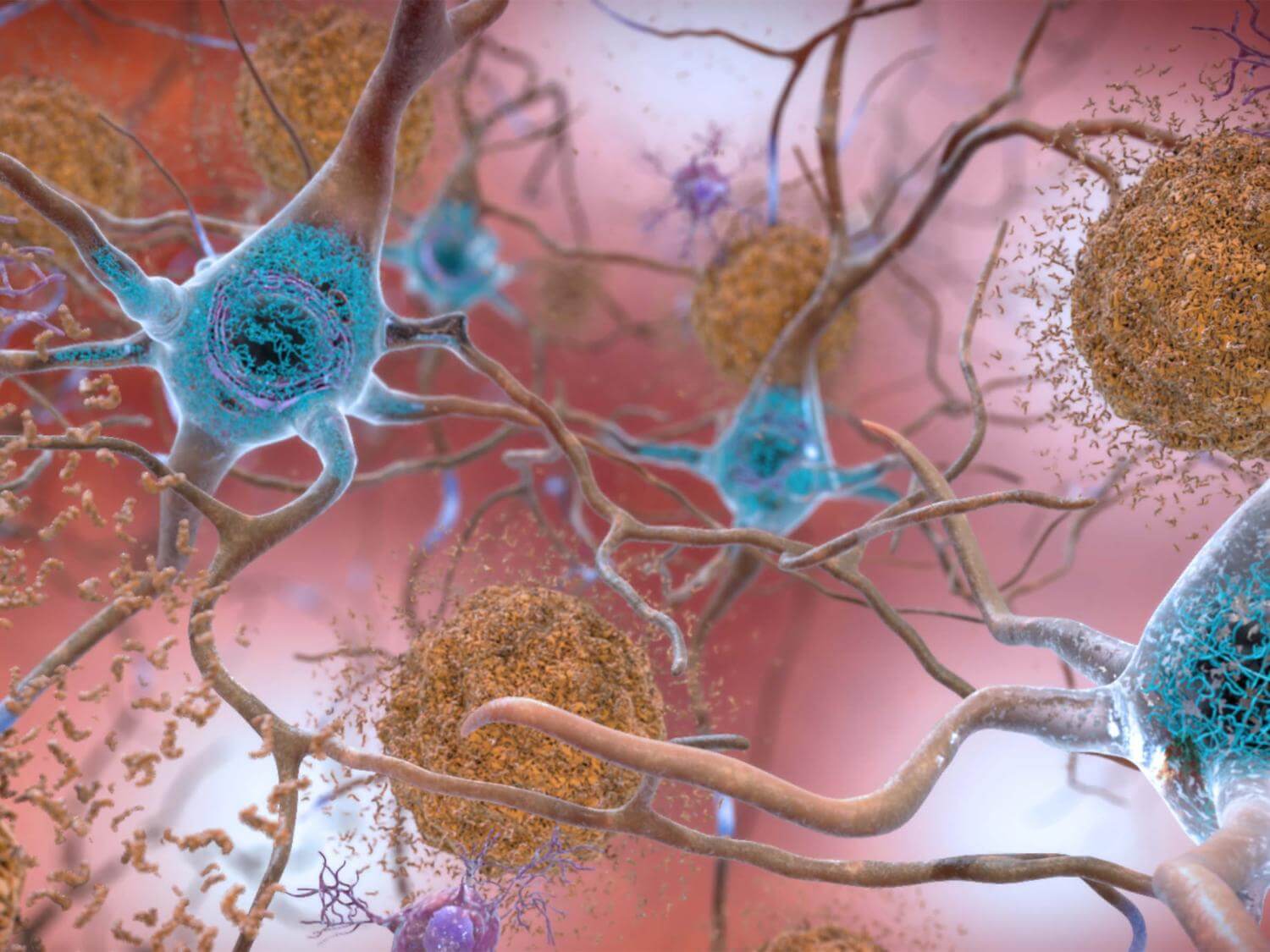
At the crux of Alzheimer’s is the accumulation of misfolded amyloid-beta peptides, commonly known as Aβ peptides. These tiny molecules clump together in the brain, damaging neurons (brain cells) and consequently affecting brain function. Modern medicine hasn’t yet found a way to combat this accumulation.
Chalmers University of Technology researchers have shown that when yeast cells, burdened by these peptides, are treated with graphene oxide, there’s a marked reduction in the accumulated peptides.
“This effect of graphene oxide has recently also been shown by other researchers, but not in yeast cells”, says study first author Xin Chen, a researcher in systems biology at Chalmers, in a university release. “Our study also explains the mechanism behind the effect. Graphene oxide affects the metabolism of the cells, in a way that increases their resistance to misfolded proteins and oxidative stress. This has not been previously reported.”
For this study, scientists opted for an unusual but effective model: baker’s yeast, Saccharomyces cerevisiae. Despite its simplicity, the yeast’s protein-controlling systems are eerily similar to those in human cells, making it an apt model to mimic human neurons affected by Alzheimer’s.
Yeast cells laden with a type of amyloid peptide, called amyloid-beta42, were used in the study.
“The yeast cells in our model resemble neurons affected by the accumulation of amyloid-beta42, which is the form of amyloid peptide most prone to aggregate formation,” explains Chen. “These cells age faster than normal, show endoplasmic reticulum stress and mitochondrial dysfunction, and have elevated production of harmful reactive oxygen radicals.”
What are graphene oxide nanoflakes?
They’re minuscule, two-dimensional structures made of carbon, boasting impressive conductivity and biocompatibility. Researchers across the globe are already harnessing their potential for endeavors like cancer treatments and drug delivery.
A unique quality of these nanoflakes is their ability to intervene in protein processes within living cells.
“As a result, it can hinder the formation of protein aggregates and promote the disintegration of existing aggregates,” says study co-author Santosh Pandit, researcher in systems biology at Chalmers. “We believe that the nanoflakes act via two independent pathways to mitigate the toxic effects of amyloid-beta42 in the yeast cells.”
However, can this exciting discovery be translated into an Alzheimer’s treatment? That remains to be seen. The team at Chalmers is optimistic, noting that graphene oxide also seems to hold promise against other neurodegenerative conditions like Huntington’s disease.
“The next step is to investigate whether it is possible to develop a drug delivery system based on graphene oxide for Alzheimer’s disease,” notes Chen. “We also want to test whether graphene oxide has beneficial effects in additional models of neurodegenerative diseases, such as Parkinson’s disease.”
The study is published in the journal Advanced Functional Materials.


