(Credit: Eddie Galaxy from Pexels)
BUDAPEST, Hungary — Super-friendly dogs are fun to be around, especially if you’re a dog-lover. However, a new study finds these lovable pups likely finish behind their more dominant pals in the dog hierarchy. A team at Eötvös Loránd University finds, even if they live in the same loving home, dogs who are more extraverted and conscientious “rank” higher than their friendlier peers.
Researchers also found friendliness displayed a negative connection to dominance scores among dogs. The team calculated this by looking at the recorded behaviors and interactions of 1,082 dogs, which measured five major personality traits in dogs, including openness/energetic, friendliness/courteousness, trustworthiness, neuroticism/confusion, and openness/intelligence.
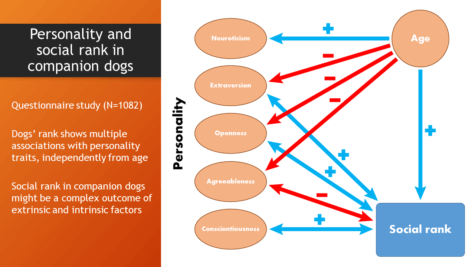
Moreover, the study found a dog’s age plays into this hierarchy in the house or at the dog park. It turns out dogs respect their elders, as older dogs were more likely to be dominant when interacting with other pups.
“As personality can slowly change with age, we needed to check whether our results still hold regardless of age. We found negative correlations between age and extraversion and age and openness while these traits have positive associations with rank. Agreeableness had a similarly negative correlation with age and a negative association with the dominance score: older dogs are less agreeable, more agreeable dogs rank lower,” says first study author Kata Vékony in a university release.
Is dominance a personality trait of its own?
Although humans often regard dominance as a separate personality trait, researchers say it works a little differently with dogs. However, it still plays a major role in the way man’s best friend interacts with their fellow canines.
“While our results support the notion that ‘dominance’ is not a separate personality trait in dogs, several different experiences, many of which are not related to competitive situations are involved in the development of personality traits of dogs. We found that the personality of family dogs have a complex relationship with the group hierarchy and the individual dogs’ rank within. Further research is needed to discover, what causal relationships may exist between personality traits and rank,” adds research team leader Péter Pongrácz.
“In our understanding, dominance is not a personality trait. At the same time it is a logical assumption that personality that has a strong influence on an individual’s social behavior could also have an effect on the course and outcome of dog-dog interactions – hence on dominance relationships,” Vékony concludes.
The findings appear in the journal Applied Animal Behaviour Science.


