
(Photo by Monkey Business Images on Shutterstock)
STANFORD, Calif. — Since men don’t have the same biological clocks that women have, a new study finds that many are waiting longer and longer to start a family — some waiting until their 50s before fathering children. Despite being able to have children, researchers at Stanford University say this growing trend is raising new concerns about the child’s health and their future.
The study, published in JAMA Network Open, analyzed over 46 million U.S. births from 2011 to 2022. What they found might surprise you: the number of babies born to fathers aged 50 and above is on the rise, challenging our stereotypes about who these older dads really are.
Contrary to popular belief, these silver-haired fathers aren’t all wealthy executives or celebrities. The study reveals a diverse group spanning various racial backgrounds and education levels. From college professors to blue-collar workers, the face of older fatherhood is changing.
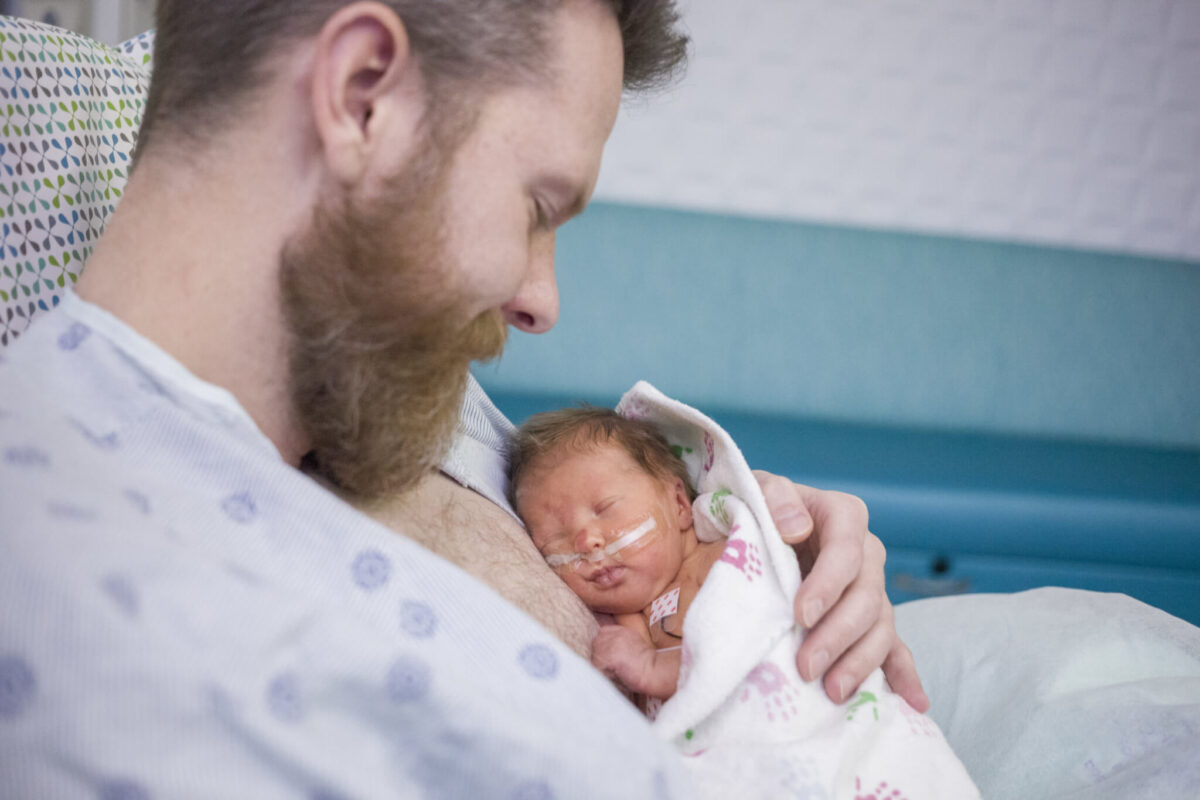
However, it’s not just about who these dads are – it’s also about the potential impacts on their children. The research suggests that babies born to fathers over 50 face slightly higher risks of premature birth and low birth weight. While these increased risks are modest, they do raise important questions about the effects of delayed fatherhood on child health.
Perhaps most intriguingly, the study found that the oldest fathers – those 70 and above – were less likely to have boys. This unexpected finding adds a new twist to our understanding of how paternal age might influence offspring.
Another key finding is the increased use of assisted reproductive technology (ART) among older fathers. As men age, they’re more likely to need a little help from science to become dads. This trend highlights the growing importance of fertility treatments in modern family planning.
The study also revealed that older fathers are more likely to have children with first-time mothers over the age of 25. This suggests a shift in family dynamics, with more couples choosing to start families later in life.
“These ongoing societal shifts underscore the need for public education and further research into the benefits and drawbacks of delayed fatherhood,” the study authors write in their report.
Paper Summary
Methodology
The researchers used data from the National Vital Statistics System, which collects information from all U.S. birth certificates. They looked at various factors, including the father’s age, race, education, and the mother’s characteristics. They also examined birth outcomes like premature birth and birth weight. To account for missing data, they used a statistical technique called inverse probability weighting.
Key Results
The percentage of births to fathers 50 and older increased from 1.1% in 2011 to 1.3% in 2022. Older fathers were more racially diverse and had varying education levels.
Babies born to older fathers had slightly higher risks of premature birth and low birth weight. The use of assisted reproductive technology was much higher among older fathers. Fathers 70 and older were less likely to have male children.
Study Limitations
The study relied on birth certificate data, which might not capture all relevant information. Also, while the researchers controlled for many factors, other unmeasured influences could affect the results. The study couldn’t determine cause-and-effect relationships, only associations.
Discussion & Takeaways
This research challenges stereotypes about older fathers and highlights the need for more public education on delayed parenthood. While there are potential risks associated with older fatherhood, there may also be benefits like financial stability and emotional maturity. The findings underscore the importance of considering paternal age in family planning discussions and medical care.
Funding & Disclosures
The study was conducted by researchers at Stanford University. One of the researchers, Dr. Michael L. Eisenberg, reported serving as a consultant for several companies in the fertility industry. This information is important for transparency, allowing readers to consider any potential conflicts of interest.


