
Life portrait of the Maidanetske mega-settlement. (credit: Susanne Beyer, Kiel University)
KIEL, Germany — Being a vegetarian was in vogue thousands of years ago in Europe. Researchers from Kiel University in Germany are revealing that settlers in European cities 6,000 years ago were mainly vegetarians, despite keeping plenty of livestock around. It turns out those animals had one primary job — fertilize crops.
Located in what is now Moldova and Ukraine, these mega-sites of ancient Trypillia societies were once the world’s largest settlements, housing up to 15,000 people. Researchers believe these Trypillia societies were Europe’s earliest urban settlements.
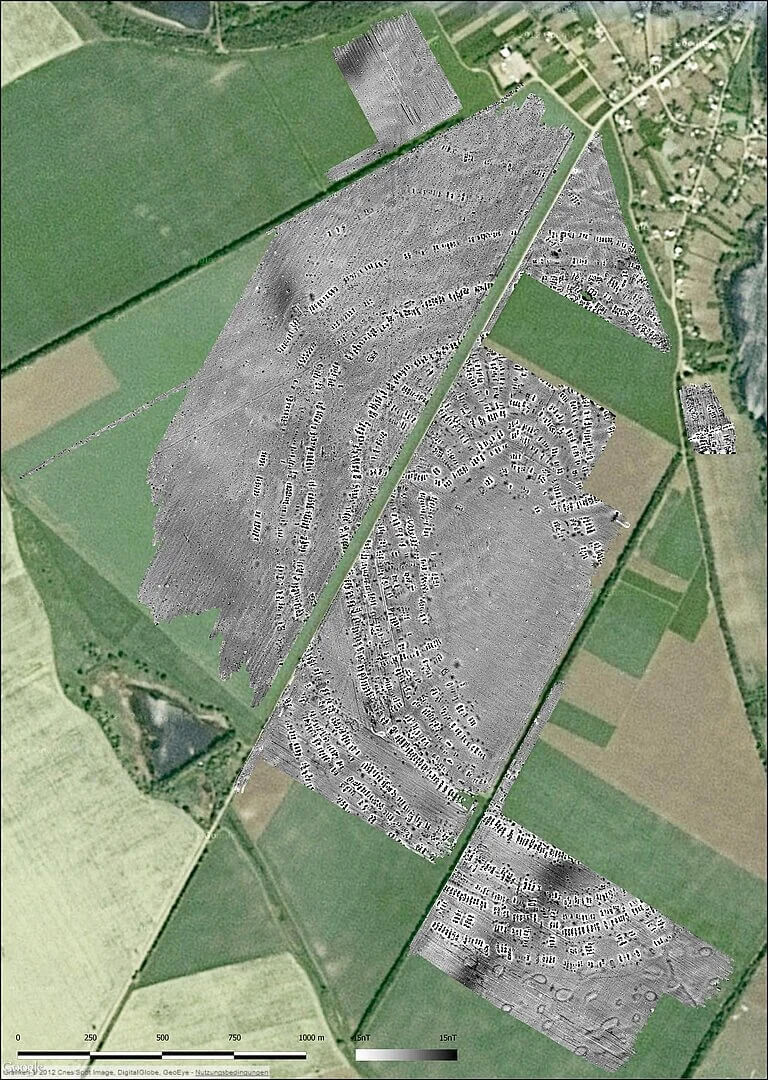
Previously, the food supply of these settlements posed numerous questions to scientists. Simply put, were cattle a source of meat or a source of manure?
“The provisioning of the residents of the mega-sites was based on extremely sophisticated food and pasture management,” says study author Dr. Frank Schlütz, a paleoecologist at Kiel University’s Collaborative Research Center (CRC) 1266, in a university release.

Contrary to the historical overestimation of spinach’s nutritional value (popularized by the fictional character Popeye), the study reveals peas as a surprisingly significant source of protein in early agriculture. The Trypillia farmers, dating back almost 7,000 years, relied heavily on a diet of grains and peas, minimizing their meat consumption.
These Trypillia societies, which emerged around 4800 BCE, were not only agriculturally advanced but also known for their impressively planned mega-sites. These settlements, some covering up to 320 hectares, were meticulously organized into neighborhoods with communal meeting houses, promoting social integration and decision-making.

To understand how these large populations sustained themselves, Kiel University researchers analyzed carbon and nitrogen isotopes from hundreds of samples, including human and animal bones and charred peas and cereal grains. These analyses shed light on livestock management, crop fertilization practices, and the dietary habits of the inhabitants. The findings suggest a predominantly vegetarian diet, with peas and grains as staple foods.
“We concluded that a large proportion of the cattle and sheep were kept on fenced pastures. Moreover, the manure of the animals produced there was used by people to intensively fertilize the peas in particular,” says Schlütz.
This sustainable approach allowed the Trypillia people to maintain a nutritious and balanced diet, rich in essential amino acids, without heavily relying on meat production. These mega-sites, though, did not last, due to social inequality.
“As we know from previous studies, social tensions arose as a result of increasing social inequality. People turned their backs on large settlements and decided to live in smaller settlements again,” says study author Dr. Robert Hofmann, archaeologist at Kiel University.
Eventually, around 3000 BCE, the Trypillia societies faded away, marking the end of these early European urban settlements.
The study is published in the journal journal PNAS.
7 Health Benefits of Vegetarianism
Whether it’s for ethical, environmental, or health reasons, embracing vegetarianism can be a transformative journey for your body and mind. Here’s a look at some of the key health benefits you might enjoy as a vegetarian:
- Heart Health: Vegetarian diets are renowned for their ability to support heart health. Rich in fruits, vegetables, and whole grains, these diets are packed with essential nutrients while being low in saturated fats – a combination that helps in reducing cholesterol levels and blood pressure, thereby diminishing the risk of heart disease.
- Weight Management: Numerous studies have shown that vegetarians tend to have a lower body mass index (BMI) compared to non-vegetarians. The high fiber content in plant-based foods keeps you feeling fuller for longer, which can help in reducing overall calorie intake and supporting healthy weight management.
- Lower Cancer Risk: A diet high in fruits, vegetables, and whole grains is packed with antioxidants, vitamins, and minerals. These nutrients play a crucial role in reducing the risk of several types of cancer, particularly those related to the digestive system.
- Better Digestive Health: The abundance of fiber in a vegetarian diet not only aids in weight management but also promotes a healthy digestive system. It helps in regular bowel movements and the prevention of digestive disorders like constipation and diverticular disease.
- Reduced Risk of Type 2 Diabetes: A vegetarian diet can be beneficial in preventing and managing Type 2 diabetes. It typically has a low glycemic index, which helps in stabilizing blood sugar levels.
- Improved Mood and Mental Health: Some studies suggest a correlation between a vegetarian diet and improved mood. The absence of certain fatty acids found in meat, coupled with the high levels of antioxidants present in plant-based foods, can positively affect mental health.
- Longevity: With the reduced risk of chronic diseases and the array of nutrients that support overall health, vegetarians may enjoy a longer lifespan compared to their meat-eating counterparts.
The key to a healthy vegetarian diet is variety and balance. Ensuring you get all the necessary nutrients, such as protein, iron, calcium, and vitamin B12, through a well-planned diet, is crucial. If you’re considering this lifestyle change, it’s a good idea to consult with a nutritionist or dietitian to create a plan that meets your individual health needs.


