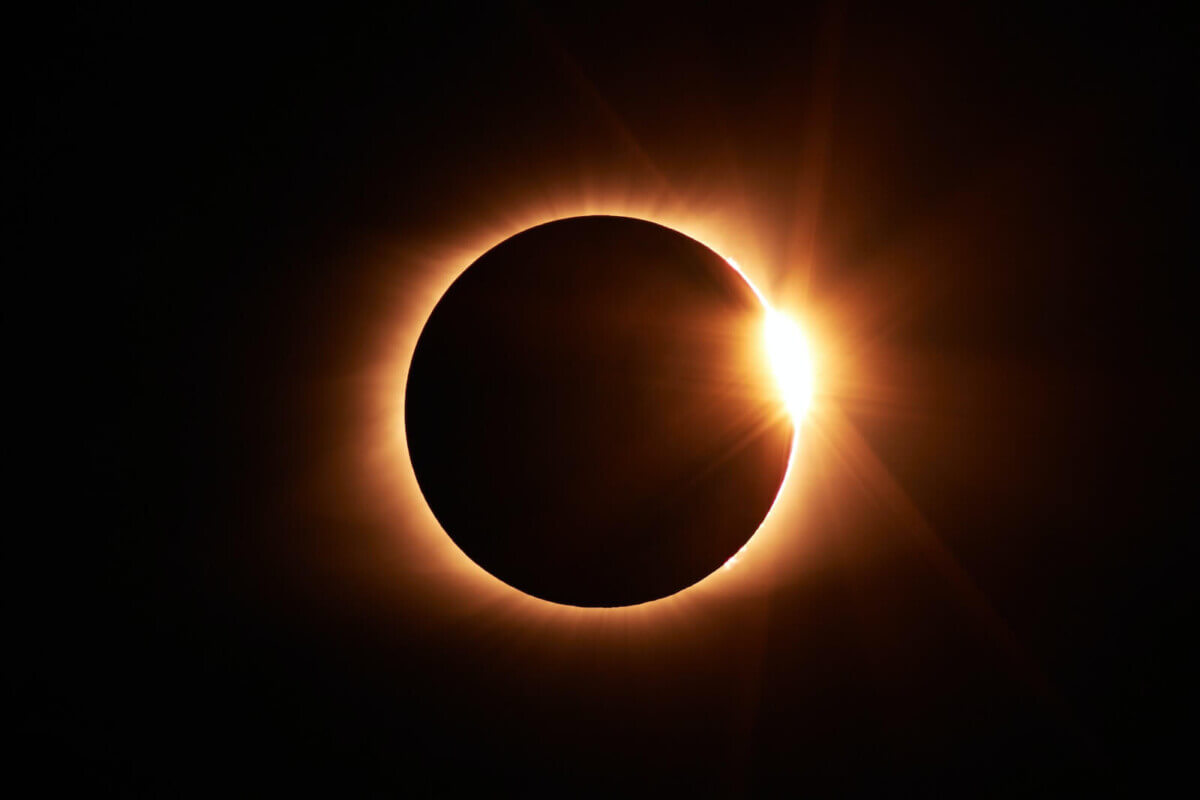
"Ring of fire" effect from solar eclipse. (Photo by Jongsun Lee on Unsplash)
In A Nutshell
- 528 everyday volunteers tracked animal behavior during the 2024 solar eclipse as part of a participatory science project called Solar Eclipse Safari.
- Participants who experienced full totality reported significantly more awe than those who saw a partial eclipse, and higher awe was tied to stronger feelings of science identity and belonging.
- Volunteers who documented dramatic animal behavior changes also reported more awe, regardless of whether they were in the path of totality.
- Gains in science identity and belonging were consistent across age, race, and gender, pointing toward awe as a potential tool for expanding who feels they belong in STEM.
When the moon swallowed the sun during the 2024 total solar eclipse, something shifted for hundreds of volunteers watching from below: they started to feel like they belonged in science. A new study published in the journal People and Nature found that the awe people reported after witnessing the eclipse was associated with a stronger sense of connection to science and a deeper sense of belonging within it.
Science has a well-documented inclusion problem, with women, people of color, and people without formal training long pushed to the margins of STEM. This research suggests that standing outside and watching the sky go dark, while paying attention to how animals respond, might be one surprisingly accessible way to change who feels welcome in science.
Researchers from North Carolina State University, New York Institute of Technology, and Illinois State University designed a participatory science project called Solar Eclipse Safari, which invited everyday people, not professional scientists, to observe and record how animals behaved during the 2024 North American total solar eclipse. Results showed that the more awe participants felt, the more their sense of science identity and belonging grew, regardless of age, gender, or racial background.
How Solar Eclipse Safari Got Everyday People Doing Real Science
Solar Eclipse Safari recruited participants through a website and SciStarter.org, a platform that connects the public with science projects. Participants were trained through online webinars and website resources before eclipse day. They each chose a focal animal, anything from a backyard dog to a wild bird, and recorded its behavior at set intervals starting at least an hour before the peak of the eclipse.
Altogether, 528 participants took part, ranging in age from 8 to 80. Just over half, about 52%, were on the path of totality, meaning they experienced a complete blackout of the sun. The rest saw only a partial eclipse. About 63% were female and 28% male, with the majority identifying as White, though the group also included Latino/Hispanic, Asian/Asian American, Black/African American, and multiracial participants.
After the eclipse, participants completed surveys on how much awe they felt, how much they identified with science, and how much they felt they belonged in scientific spaces. Science identity was measured with a visual: two overlapping circles labeled “you” and “science,” with participants choosing how much they overlapped. Belonging was measured by asking how comfortable and welcome they felt while doing science, and how much they felt they fit in.
Total Darkness Made All the Difference
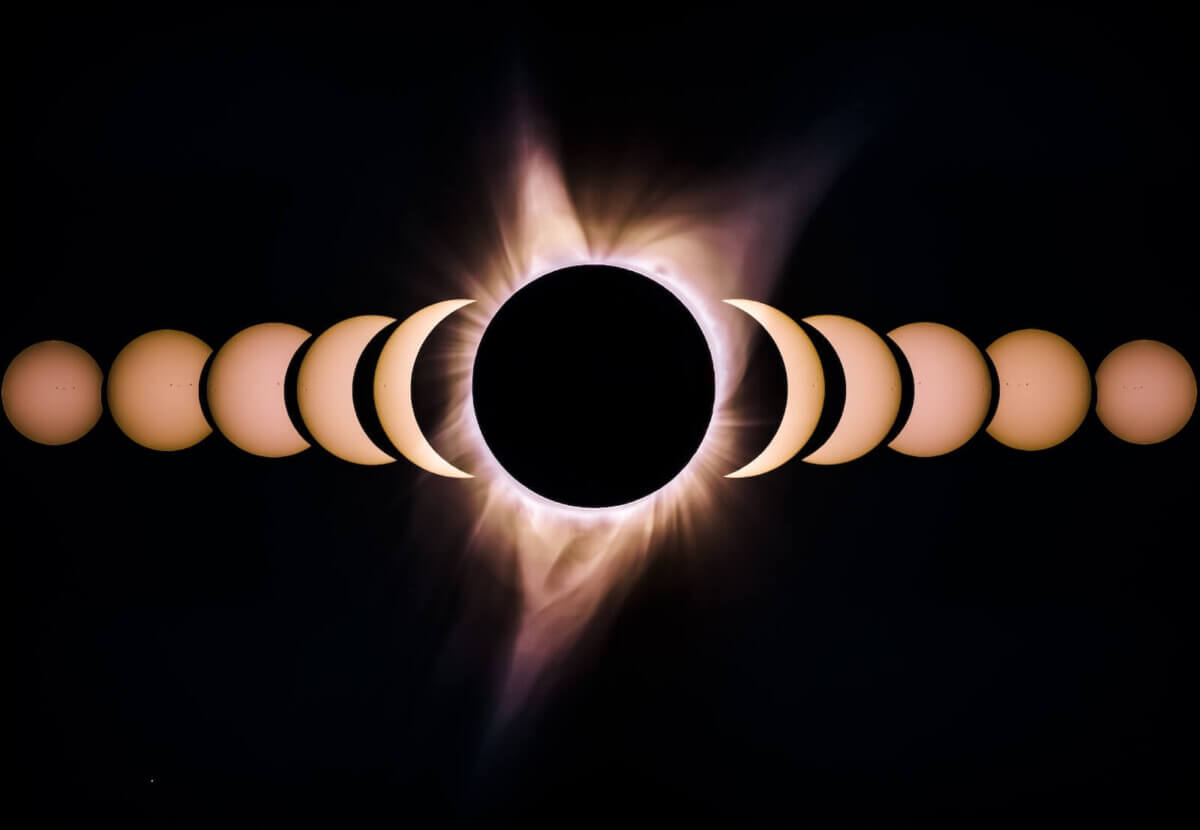
Participants on the path of totality scored much higher on awe than those who only saw a partial eclipse. Prior research from the 2017 “Great American” eclipse found the same pattern: people who saw totality used far more awe-related language on social media.
Physics explains why totality feels so different from even a near-total eclipse. As the paper notes, the sun is roughly 400,000 times brighter than the moon, meaning a 99.9% partial eclipse still leaves 400 times as much light as a full moon. True totality, with its sudden darkness, visible stars, and temperature drop, is in a category of its own.
But totality was not the only thing driving awe. Participants who recorded more dramatic changes in their animal’s behavior, a dog going still or birds retreating to their roosts mid-afternoon, also reported feeling more awe, even among those who did not see totality. Researchers calculated behavior change using the observation notes themselves, not just by asking participants whether they noticed anything different.
“Participants may not actually need to recognize that change has occurred in order to benefit from participation,” the authors wrote.
Female participants also reported higher awe than male participants, a finding the researchers suggested could be relevant to outreach efforts aimed at bringing more women and girls into science.
Why Awe May Be the Engine Behind Science Identity
Path analysis, a statistical method for tracing how factors may relate across multiple steps, helped the team map how awe connected to science identity and belonging. Awe appeared to be an important link between the eclipse experience and gains in science identity, and it was tied to gains in belonging as well, though the connection to belonging was less direct.
Age, gender, and race did not predict who experienced growth, pointing toward awe-inspiring nature experiences as a potential equalizer in a field that has long struggled with inclusion.
What This Means for the Future of Science Participation
All of the measures were self-reported, and surveys were administered only once, right after the eclipse, leaving open whether gains in science identity and belonging persist over time. Cultural differences in how people relate to nature were also not accounted for.
Still, awe may be an active ingredient in building the kind of science identity that keeps people engaged with STEM, and nature offers plenty of ways to produce that feeling.
Total eclipses come and go, but this research suggests the scientific community does not have to wait for the sky to go dark to spark the feeling that draws people toward science. It just has to find better ways to put people in awe.
Paper Notes
Limitations
The study’s authors identify several important limitations. All outcome measures were self-reported, meaning they relied on participants’ own descriptions of their feelings and experiences rather than independent or physical measurements. The surveys were also retrospective, taken after the event, which, while a recognized and accepted methodology, introduces the possibility of recall bias. The study only captured outcomes immediately following the eclipse and did not follow up to assess whether gains in science identity and belonging persisted over time. Additionally, the research was unable to account for cultural variation in how different groups relate to nature, which the authors flag as an area requiring future investigation. The gender variable was also simplified to a binary categorization due to the small number of participants who identified outside of male or female categories.
Funding and Disclosures
This research was funded by the North Carolina State University Data Science and AI Academy. The authors declare no conflicts of interest. Data from the study are publicly available on the Open Science Framework.
Publication Details
Authors: Kelly Lynn Mulvey, Ashley R. Deutsch, Caren Cooper, Rhianna Absher, Nhaturie Atkinson, Brandon Wilson, Jacqueline Cerda-Smith, Martha Batul, Lara L. Martens, and Adam Hartstone-Rose | Institutional Affiliations: North Carolina State University (Raleigh, NC); New York Institute of Technology (Old Westbury, NY); Illinois State University (Normal, IL) | Journal: People and Nature (published by John Wiley & Sons Ltd on behalf of the British Ecological Society) | Paper Title: “Awe in nature fosters science identity and belonging in participatory scientists during an eclipse” | DOI: 10.1002/pan3.70347 | Received: April 30, 2025 | Accepted: April 23, 2026


