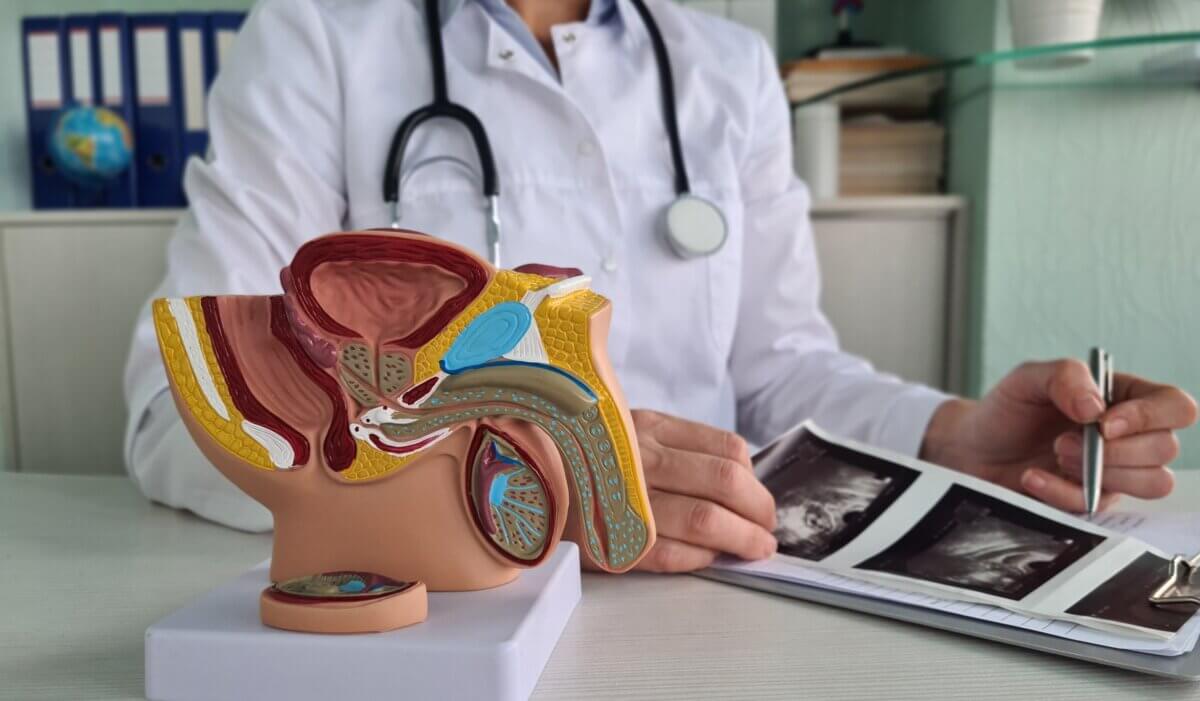
Male reproductive system model. (Photo by NMK-Studio on Shutterstock)
In A Nutshell
- Men who reported 21 or more ejaculations a month had roughly 20% lower odds of a prostate cancer diagnosis than men reporting 4 to 7 a month, tracked over nearly two decades.
- Ejaculation frequency wasn’t linked to high-risk or metastatic prostate cancer in the same study, only to overall and lower-risk diagnoses.
- Moderate frequency, about two to four times a week, was linked to lower risk, but the relationship wasn’t a simple “more is always better” line.
Frequent ejaculation has been linked with a modestly lower rate of prostate cancer diagnoses, according to one of the largest studies on the topic. But the finding does not mean more is necessarily better, or that it prevents aggressive disease.
The most-cited evidence comes from the Health Professionals Follow-Up Study, a Harvard cohort that has tracked tens of thousands of American men since the 1980s. In a 2016 analysis published in European Urology, led by Boston University epidemiologist Jennifer Rider with Harvard colleagues, researchers followed 31,925 men who reported their average monthly ejaculation frequency in 1992 and were tracked through 2010, accumulating 480,831 person-years and 3,839 prostate cancer diagnoses.
Compared with men reporting 4 to 7 ejaculations a month, those reporting 21 or more had a 19% lower risk of diagnosis based on their frequency at ages 20 to 29, and a 22% lower risk based on frequency at ages 40 to 49. Results held up after adjusting for PSA screening, smoking, and other factors, and were similar when restricted to men who had been screened.
Critically, the reduced risk applied mainly to low- and intermediate-risk tumors. Ejaculation frequency showed no significant association with high-risk, localized disease or with cancer that had already spread by diagnosis, the researchers reported.
How Strong Is The Evidence, Really?
This is the part worth sitting with. The study is observational, not a controlled trial, so it can show an association but can’t prove that ejaculating more actually causes lower risk. Frequency was self-reported, sometimes recalling behavior from decades earlier, which invites recall error. And the size of the effect has shifted with more data: an earlier analysis of the same cohort, published in 2004 with a shorter follow-up and about half as many cancer cases, found a larger 31% risk reduction at the same threshold. The estimate got smaller, not larger, as more years of data came in, which is the direction you’d expect if some of the original effect reflected chance or confounding rather than biology.
A 2018 dose-response meta-analysis in the Journal of Sexual Medicine, summarized by the International Society for Sexual Medicine, pooled 22 studies and 55,490 men across nine countries and found moderate ejaculation frequency, roughly two to four times weekly, associated with lower risk, but described the relationship as non-linear rather than a straight dose-response curve. That same review noted that an earlier 2002 meta-analysis had actually found the opposite association, higher ejaculation frequency linked to higher prostate cancer risk, underscoring how much this evidence has shifted as new cohorts were added.
Proposed biological mechanisms, less accumulated carcinogen exposure in prostatic fluid, reduced concentration of a hormone involved in tumor growth, immune effects from orgasm-related hormone release, remain theoretical and haven’t been directly confirmed in humans.
Do Major Health Organizations Recommend This?
No. The American Cancer Society’s official list of prostate cancer risk factors centers on age, race, family history, and genetics, and does not include ejaculation or sexual frequency. Clinicians who discuss this research with patients generally frame it as reassurance that an active sex life isn’t harmful, rather than as a prevention strategy to actively pursue.
For an established, modifiable way to lower risk, the stronger evidence points toward maintaining a healthy weight, staying physically active, and following general dietary guidance, not toward a specific sexual frequency target.


